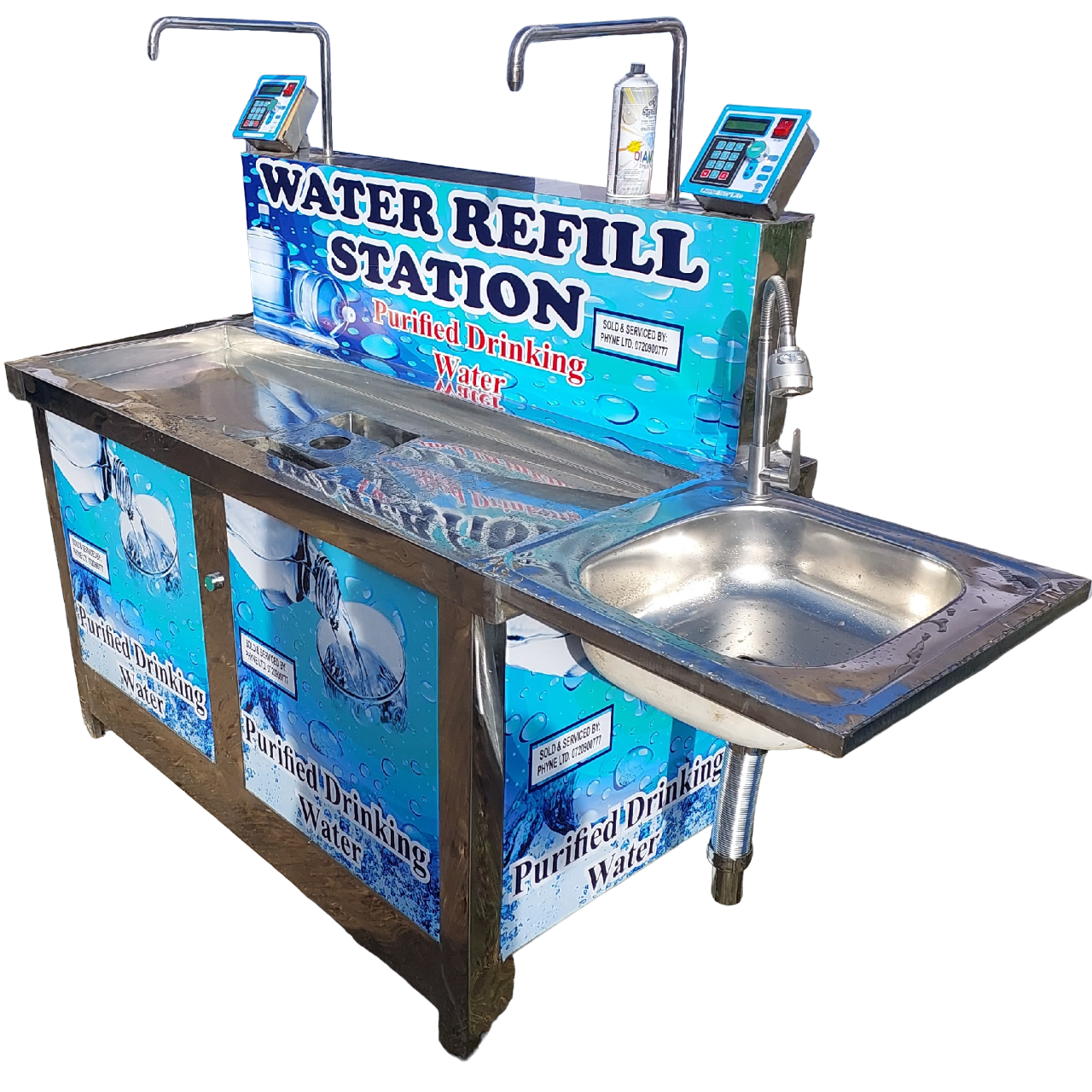
How to Start a Water Refill Station in Kenya — Step-by-Step Guide & Costs
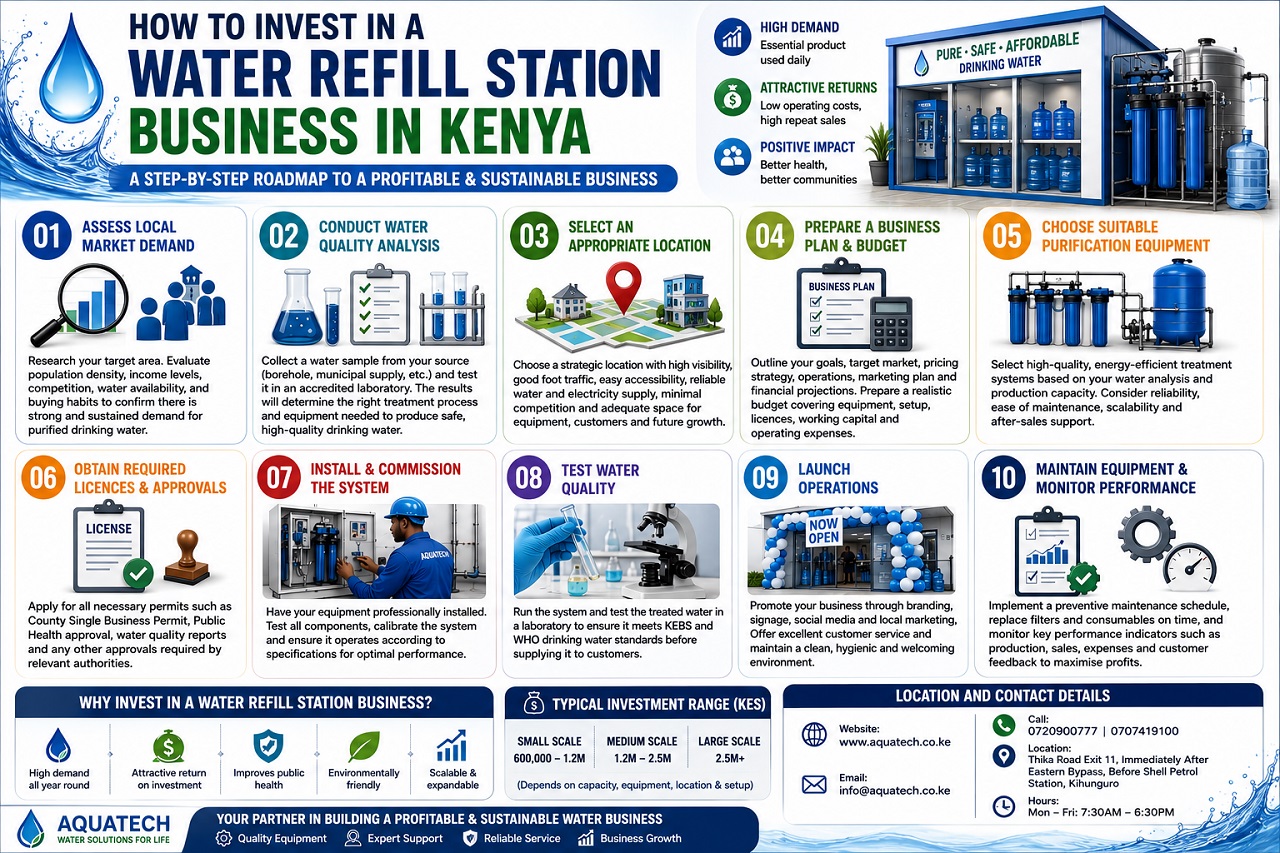
Step by Step Guide on How to Start a Water Refill Station Business in Kenya Are you planning to start a water refill station business in Kenya and wondering how to go about it? This post will guide you step by step on how to start a profitable water vending business in Kenya for both retail and corporate markets. As the leading experts in manufacturing high quality water refill station machines in Kenya, we also know what it takes to operate a successful water refill station business. How to Invest in a Water Refill Station Business in Kenya- Step by Step Guide Step 1. Assess Local Market Demand Before investing in a water refill station business, conduct a thorough assessment of the local market to determine whether there is sufficient demand for purified drinking water. Evaluate factors such as population density, household income levels, availability of competing water vendors, reliability of municipal water supply, and consumer purchasing habits. High-density residential estates, rapidly growing peri-urban areas, educational institutions and commercial centres often present stronger demand because they serve large numbers of people who require safe drinking water daily. Visit potential locations at different times of the day to observe pedestrian traffic, customer behaviour and accessibility. Speaking with residents, shop owners and property managers can also provide valuable insights into existing demand and any unmet needs. A well-researched location significantly improves the likelihood of achieving sustainable sales and a favourable return on investment. Also: Is a Water Vending Station Business Profitable in Kenya? Step 2. Conduct Water Quality Analysis The quality of the source water determines the type of treatment system required and ultimately influences both capital investment and operating costs. Before purchasing any equipment, collect a representative water sample and have it analysed by an accredited laboratory to identify physical, chemical and microbiological characteristics. Laboratory testing can reveal issues such as high salinity, excessive hardness, iron, manganese, nitrates, fluoride, turbidity or bacterial contamination that may not be visible to the naked eye. The test results enable water treatment specialists to recommend the most appropriate purification process rather than relying on generic equipment configurations. Investing in equipment without first analysing the water may result in underperforming systems, unnecessary expenditure or failure to achieve the required drinking water quality standards. Water analysis should also be repeated periodically to verify that the treatment process continues to produce safe, high-quality drinking water. Step 3. Select an Appropriate Location Choosing the right location is one of the most important decisions in determining the long-term success of a water refill station business. The ideal site should have a large catchment population, good visibility, convenient access for pedestrians and motorists, reliable water and electricity supply, and adequate space for equipment installation and customer movement. Residential estates, shopping centres, universities, hospitals and mixed-use developments often provide consistent demand because customers can conveniently refill their containers during their daily routines. It is equally important to evaluate nearby competition, rental costs and opportunities for future expansion before signing a lease agreement. While lower rent may appear attractive, a strategically located premises with higher customer traffic usually delivers stronger long-term profitability. Selecting the right location from the outset reduces business risk and improves the likelihood of achieving a faster return on investment. Step 4. Prepare a Business Plan and Budget A comprehensive business plan provides a structured roadmap for establishing and growing a successful water refill station business. It should clearly define your business objectives, target market, pricing strategy, operational model, estimated capital requirements, projected cash flow and expected return on investment. Your financial plan should include equipment costs, shop fitting, licensing, installation, utilities, staff salaries, maintenance, marketing and adequate working capital for the first few months of operation. Preparing realistic financial projections using conservative sales estimates allows you to evaluate whether the investment remains viable under different market conditions. A detailed business plan is also essential when seeking financing from banks, investors or development finance institutions because it demonstrates that the project has been carefully evaluated. Regularly reviewing and updating the business plan ensures that it remains aligned with changing market conditions and business objectives. Also: How to Start a Fully Equipped Water Vending Machine Business in Kenya with a Budget of Ksh 350,000 Step 5. Choose Suitable Water Purification Equipment Selecting the correct water purification equipment is critical to producing consistently safe drinking water while maintaining efficient operating costs. Equipment should always be specified based on laboratory water analysis, anticipated production capacity and future business growth rather than price alone. A typical commercial treatment system may include sediment filtration, multimedia filtration, activated carbon filtration, water softening where necessary, reverse osmosis membranes, ultraviolet sterilisation and ozone disinfection, depending on the characteristics of the source water. Investors should also evaluate equipment durability, energy efficiency, ease of maintenance, availability of spare parts and the supplier’s technical support capabilities. Purchasing high-quality equipment from an experienced supplier often results in lower lifecycle costs because reliable systems experience fewer breakdowns and maintain consistent water quality. Choosing scalable equipment also allows the business to expand production as customer demand increases without requiring complete system replacement. Step 6. Obtain Required Licences and Regulatory Approvals Operating a water refill station legally requires compliance with applicable national and county regulations designed to protect public health and ensure water safety. Depending on your location and business model, approvals may include a County Single Business Permit, Public Health certification, water quality laboratory reports, food hygiene compliance and any additional permits required by the relevant regulatory authorities. Businesses should also ensure that treated water consistently meets the applicable drinking water quality standards through routine testing and proper record keeping. Working with experienced equipment suppliers can simplify the licensing process because they are often familiar with the documentation and technical requirements expected during inspections. Regulatory compliance should be viewed as an ongoing commitment rather than a one-time exercise, with regular monitoring helping to maintain consumer confidence and protect the business’s reputation. Step 7. Install and Commission the Water Treatment System Professional installation and commissioning ensure … Read more