Blog - AquaTech

Commercial RO System Kenya: What to Consider Before Buying
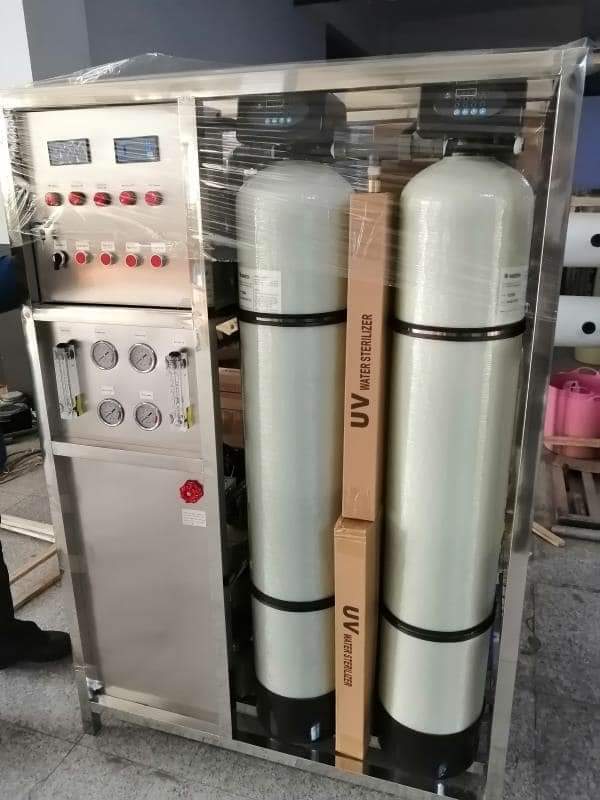
Commercial RO System Kenya: What to Consider Before Buying

What Should I Consider When Investing in a Commercial RO System in Kenya Investing in a commercial reverse osmosis system is a significant step for any business in Kenya. Whether you run a water bottling plant, a hotel, or a manufacturing facility, water quality directly impacts your bottom line. Commercial reverse osmosis technology, commonly known as a commercial RO system, provides an efficient way to purify water. However, choosing the wrong system can lead to high operating costs, frequent breakdowns, and regulatory fines. Navigating the local market requires an understanding of specific technical parameters and environmental challenges. From varying borehole salinity levels to strict local compliance standards, several variables require careful planning. We have compiled this comprehensive guide to help you make an informed investment. This article outlines the essential technical, financial, and regulatory factors you must evaluate before purchasing your equipment. 1. Feed Water Quality and Comprehensive Lab Analysis You must never purchase a commercial RO system without a detailed chemical analysis of your source water. In Kenya, water characteristics vary dramatically depending on the location and the extraction method. Municipal water from local water companies differs significantly from underground borehole water. Borehole water across the country often contains complex mineral profiles that can rapidly destroy unprotected reverse osmosis membranes. We highly recommend taking water samples to an accredited laboratory before reviewing equipment options. Testing should verify several parameters that dictate your pre-treatment setup and membrane selection. Key Water Parameters to Test Total Dissolved Solids (TDS): This measures the combined inorganic salts dissolved in water. High TDS levels require heavy-duty high-pressure pumps and specialized brackish water membranes. Water Hardness: This refers to the concentration of calcium and magnesium ions. Hard water causes severe mineral scaling on membrane surfaces, reducing system efficiency. Iron and Manganese: These elements are common in Kenyan boreholes. When exposed to oxygen, they oxidize and form sticky deposits that clog membrane pores. Microbiological Contaminants: The presence of coliform bacteria or E. coli dictates the required intensity of your post-purification sterilization. Location in Kenya Common Water Quality Profile Primary Pre-treatment Requirement Nairobi Rift Valley (e.g., Nakuru, Naivasha) Exceptionally high fluoride levels, high alkalinity Specialized fluoride reduction filters, pH correction Coast Region (e.g., Mombasa, Kilifi) High salinity, extreme TDS, high chloride ions Seawater desalination membranes, anti-scalant dosing Nairobi Basin (e.g., Syokimau, Kitengela) Moderate to high TDS, severe water hardness, high iron Commercial water softeners, iron removal filters Lake Victoria Basin (e.g., Kisumu) High turbidity, suspended solids, organic matter Sand filters, coagulant dosing, ultrafiltration (UF) 2. Pre-Treatment Systems and Membrane Protection A reverse osmosis membrane is highly sensitive to fouling, scaling, and chemical degradation. Fouling occurs when suspended solids or organic matter accumulate on the membrane surface. Scaling happens when dissolved minerals precipitate out of the water and form a hard crust. To prevent these issues, your commercial RO system must include a robust pre-treatment train. [Raw Water Source] ➔ [Sediment/Sand Filter] ➔ [Carbon Filter] ➔ [Water Softener/Anti-scalant] ➔ [5-Micron Cartridge] ➔ [High-Pressure Pump] ➔ [RO Membranes] Investing in high-quality pre-treatment components extends the lifespan of your core RO elements from months to years. Skipping these stages to save on initial capital expenditure will inevitably increase your operational costs. Essential Pre-Treatment Components Multimedia Sand Filters: These pressure vessels remove large suspended solids, silt, and sand particles down to approximately 20 microns. Activated Carbon Filters: These filters remove chlorine, organic compounds, unpleasant tastes, and odours. Chlorine must be eliminated completely because it permanently degrades thin-film composite RO membranes. Water Softeners or Anti-Scalant Dosing Units: Water softeners swap calcium and magnesium ions for sodium ions using ion-exchange resin. Alternatively, anti-scalant dosing pumps inject specialized chemicals to prevent mineral crystals from binding to the membrane. Micro Sediment Cartridge Filters: Positioned immediately before the high-pressure pump, these 1-micron to 5-micron filters act as a final mechanical barrier. 3. Regulatory Compliance and Kenyan Drinking Water Standards Operating a commercial water business or food processing plant in Kenya requires strict adherence to statutory regulations. Producing purified water without the correct certifications can lead to immediate closure by government authorities. Your commercial RO system must be technically capable of producing water that matches local quality benchmarks. The primary regulatory body is the Kenya Bureau of Standards (KEBS). Any water intended for public consumption or commercial packaging must comply with the EAS 12 standard for potable water. This standard sets strict limits on chemical concentrations and demands zero microbial activity. Raw Borehole Water ➔ RO Purification ➔ UV + Ozone Sterilization ➔ KEBS Certified Drinking Water Critical Regulatory Requirements Microbiological Sterilization: KEBS guidelines require absolute destruction of pathogenetic bacteria. Your system layout must include a final Ultraviolet (UV) sterilizer and an ozone generator. Ozone provides residual disinfection, keeping water sterile inside storage tanks and bottles. Water Resources Authority (WRA): If your source is a borehole, you must hold a valid WRA abstraction permit. This permit regulates the volume of underground water you can legally pump daily. National Environment Management Authority (NEMA): RO systems generate concentrated wastewater known as brine or reject water. NEMA regulates how commercial entities discharge this high-salinity effluent into public sewers or environment environments. 4. System Capacity, Recovery Rates, and Sizing Strategy Sizing a commercial RO system requires balancing your daily volume demands with the physical capabilities of the equipment. System output is generally measured in Litres Per Hour (LPH) or Litres Per Day (LPD). You should calculate your peak water demand rather than your average daily use. Peak Hourly Water Demand x 1.25 Safety Margin = Target Commercial RO System LPH Rating Choosing a system that is too small forces the equipment to run continuously for 24 hours, accelerating mechanical wear. Conversely, an oversized system leads to high capital expenditure and unnecessary power consumption during idling phases. Understanding Recovery Rates and Waste Water Every reverse osmosis system splits the incoming feed water into two streams: permeate (purified water) and concentrate (reject water). The recovery rate is the percentage of feed water that becomes purified water. Standard commercial RO systems in Kenya operate … Read more
How to Start a Water Refill Station in Kenya — Step-by-Step Guide & Costs

How to Start a Water Refill Station in Kenya — Step-by-Step Guide & Costs

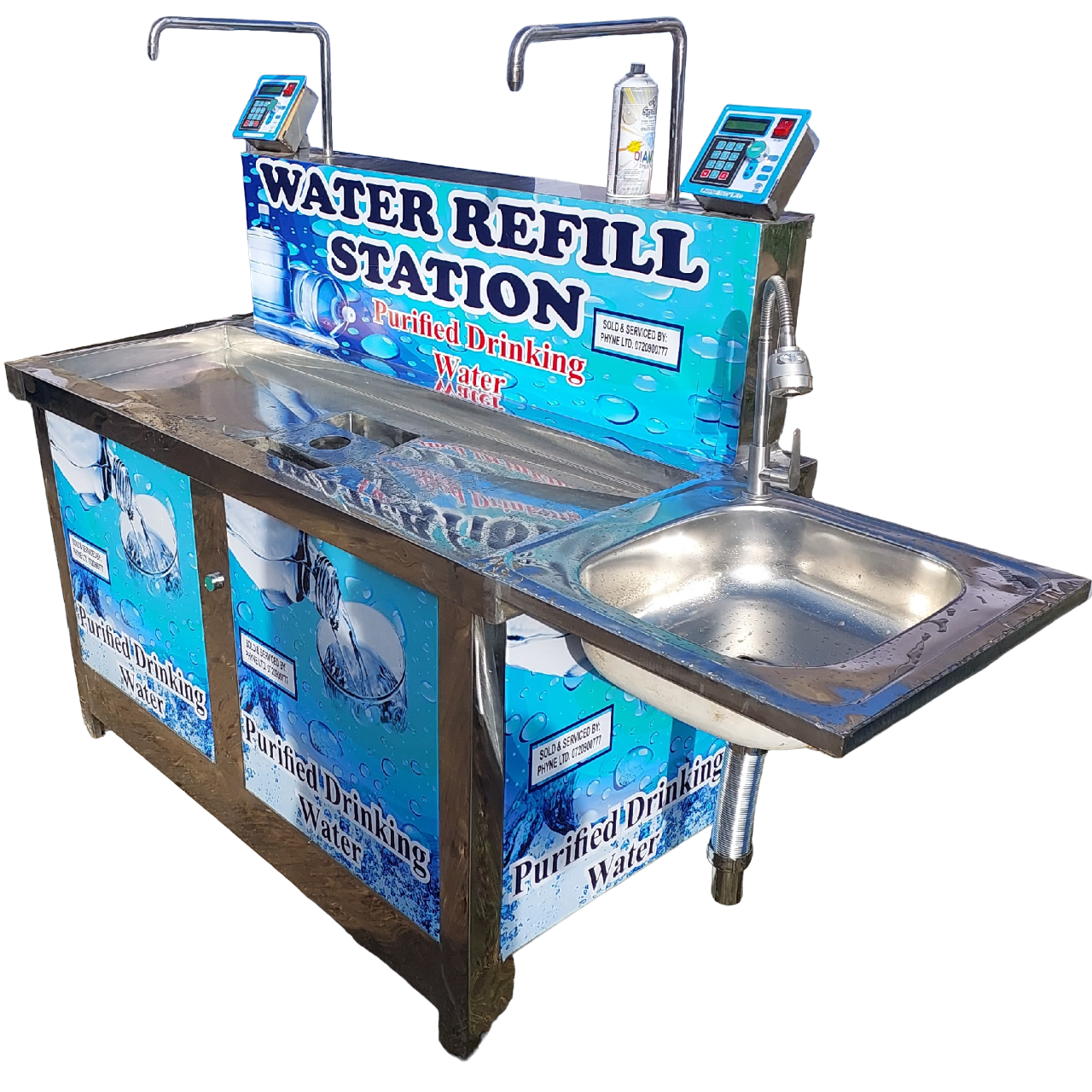
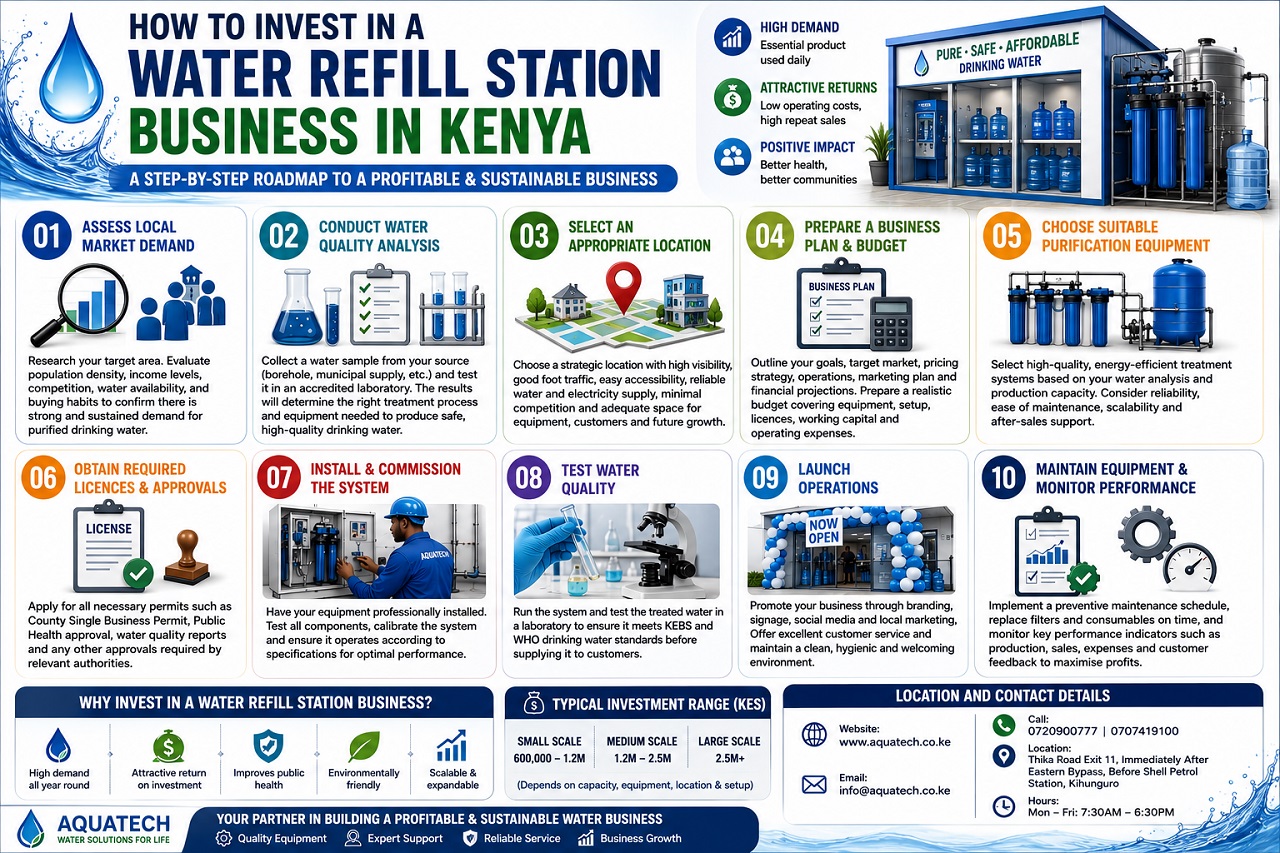
Step by Step Guide on How to Start a Water Refill Station Business in Kenya Are you planning to start a water refill station business in Kenya and wondering how to go about it? This post will guide you step by step on how to start a profitable water vending business in Kenya for both retail and corporate markets. As the leading experts in manufacturing high quality water refill station machines in Kenya, we also know what it takes to operate a successful water refill station business. How to Invest in a Water Refill Station Business in Kenya- Step by Step Guide Step 1. Assess Local Market Demand Before investing in a water refill station business, conduct a thorough assessment of the local market to determine whether there is sufficient demand for purified drinking water. Evaluate factors such as population density, household income levels, availability of competing water vendors, reliability of municipal water supply, and consumer purchasing habits. High-density residential estates, rapidly growing peri-urban areas, educational institutions and commercial centres often present stronger demand because they serve large numbers of people who require safe drinking water daily. Visit potential locations at different times of the day to observe pedestrian traffic, customer behaviour and accessibility. Speaking with residents, shop owners and property managers can also provide valuable insights into existing demand and any unmet needs. A well-researched location significantly improves the likelihood of achieving sustainable sales and a favourable return on investment. Also: Is a Water Vending Station Business Profitable in Kenya? Step 2. Conduct Water Quality Analysis The quality of the source water determines the type of treatment system required and ultimately influences both capital investment and operating costs. Before purchasing any equipment, collect a representative water sample and have it analysed by an accredited laboratory to identify physical, chemical and microbiological characteristics. Laboratory testing can reveal issues such as high salinity, excessive hardness, iron, manganese, nitrates, fluoride, turbidity or bacterial contamination that may not be visible to the naked eye. The test results enable water treatment specialists to recommend the most appropriate purification process rather than relying on generic equipment configurations. Investing in equipment without first analysing the water may result in underperforming systems, unnecessary expenditure or failure to achieve the required drinking water quality standards. Water analysis should also be repeated periodically to verify that the treatment process continues to produce safe, high-quality drinking water. Step 3. Select an Appropriate Location Choosing the right location is one of the most important decisions in determining the long-term success of a water refill station business. The ideal site should have a large catchment population, good visibility, convenient access for pedestrians and motorists, reliable water and electricity supply, and adequate space for equipment installation and customer movement. Residential estates, shopping centres, universities, hospitals and mixed-use developments often provide consistent demand because customers can conveniently refill their containers during their daily routines. It is equally important to evaluate nearby competition, rental costs and opportunities for future expansion before signing a lease agreement. While lower rent may appear attractive, a strategically located premises with higher customer traffic usually delivers stronger long-term profitability. Selecting the right location from the outset reduces business risk and improves the likelihood of achieving a faster return on investment. Step 4. Prepare a Business Plan and Budget A comprehensive business plan provides a structured roadmap for establishing and growing a successful water refill station business. It should clearly define your business objectives, target market, pricing strategy, operational model, estimated capital requirements, projected cash flow and expected return on investment. Your financial plan should include equipment costs, shop fitting, licensing, installation, utilities, staff salaries, maintenance, marketing and adequate working capital for the first few months of operation. Preparing realistic financial projections using conservative sales estimates allows you to evaluate whether the investment remains viable under different market conditions. A detailed business plan is also essential when seeking financing from banks, investors or development finance institutions because it demonstrates that the project has been carefully evaluated. Regularly reviewing and updating the business plan ensures that it remains aligned with changing market conditions and business objectives. Also: How to Start a Fully Equipped Water Vending Machine Business in Kenya with a Budget of Ksh 350,000 Step 5. Choose Suitable Water Purification Equipment Selecting the correct water purification equipment is critical to producing consistently safe drinking water while maintaining efficient operating costs. Equipment should always be specified based on laboratory water analysis, anticipated production capacity and future business growth rather than price alone. A typical commercial treatment system may include sediment filtration, multimedia filtration, activated carbon filtration, water softening where necessary, reverse osmosis membranes, ultraviolet sterilisation and ozone disinfection, depending on the characteristics of the source water. Investors should also evaluate equipment durability, energy efficiency, ease of maintenance, availability of spare parts and the supplier’s technical support capabilities. Purchasing high-quality equipment from an experienced supplier often results in lower lifecycle costs because reliable systems experience fewer breakdowns and maintain consistent water quality. Choosing scalable equipment also allows the business to expand production as customer demand increases without requiring complete system replacement. Step 6. Obtain Required Licences and Regulatory Approvals Operating a water refill station legally requires compliance with applicable national and county regulations designed to protect public health and ensure water safety. Depending on your location and business model, approvals may include a County Single Business Permit, Public Health certification, water quality laboratory reports, food hygiene compliance and any additional permits required by the relevant regulatory authorities. Businesses should also ensure that treated water consistently meets the applicable drinking water quality standards through routine testing and proper record keeping. Working with experienced equipment suppliers can simplify the licensing process because they are often familiar with the documentation and technical requirements expected during inspections. Regulatory compliance should be viewed as an ongoing commitment rather than a one-time exercise, with regular monitoring helping to maintain consumer confidence and protect the business’s reputation. Step 7. Install and Commission the Water Treatment System Professional installation and commissioning ensure … Read more

UF vs RO Water Purification Systems in Kenya: Which One Should You Choose?

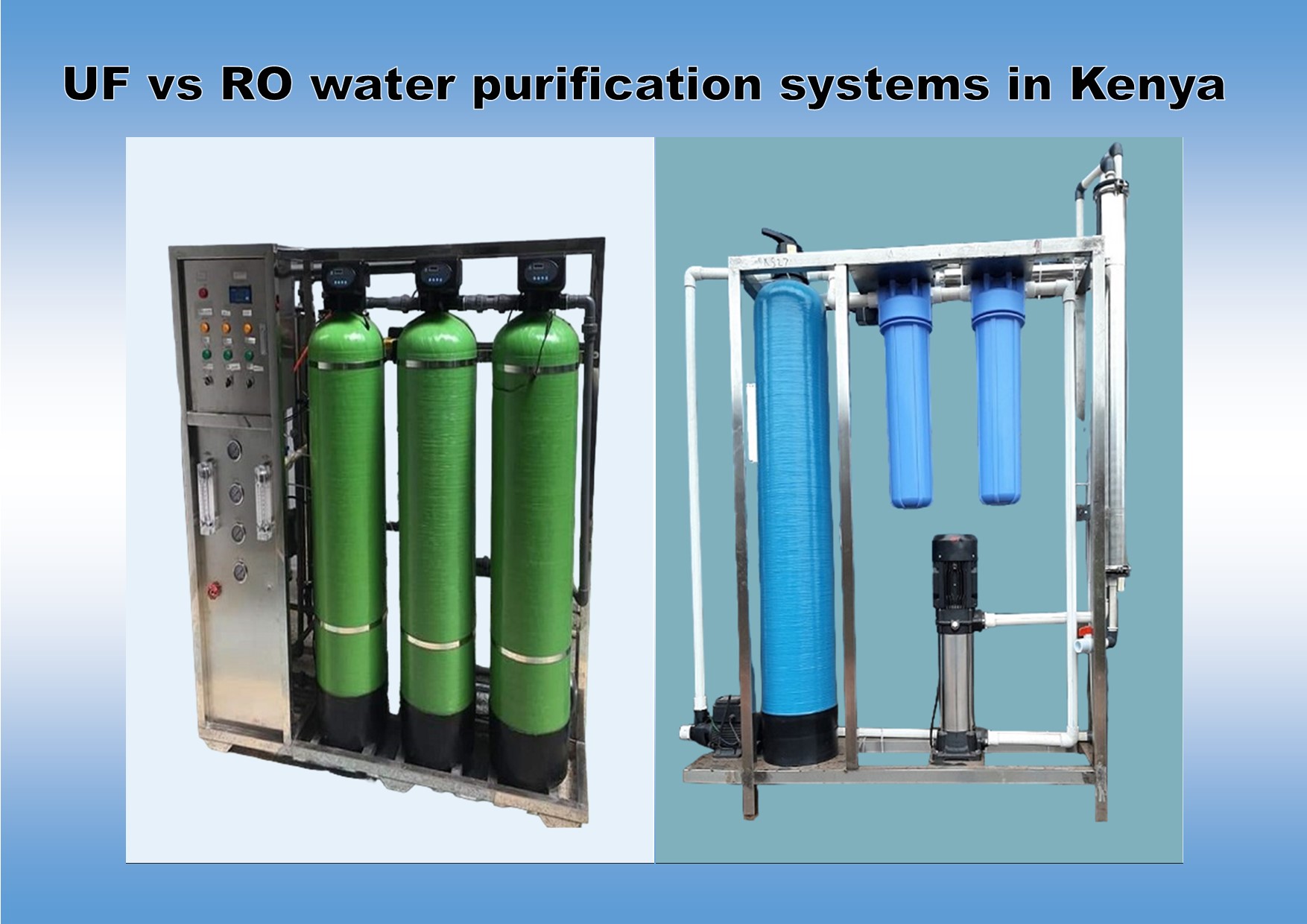
UF vs RO water purification systems in Kenya

UF vs RO Water Purification Systems in Kenya: Which One Should You Choose? Choosing between Ultrafiltration (UF) and Reverse Osmosis (RO) water purification systems is one of the most common decisions faced by homeowners, institutions, and businesses in Kenya. While both technologies improve water quality, they serve very different purposes depending on your water source, usage needs, and budget. This guide on UF vs RO water purification systems in Kenya explains the key differences between UF and RO systems, when each is the right choice, and how to avoid costly mistakes when selecting a water purification solution. UF vs RO water purification systems in Kenya: Understanding the difference between UF and RO water purification The main difference between UF and RO lies in what each technology removes from water. UF systems focus on removing bacteria, viruses, suspended solids, and turbidity. RO systems remove dissolved salts, heavy metals, chemicals, and microorganisms. In simple terms: UF improves already treated or municipal water RO treats raw, borehole, salty, or high TDS water Choosing the wrong system can lead to poor water quality or unnecessary operating costs. What is Ultrafiltration (UF) water purification? Ultrafiltration uses a UF membrane with very fine pores that physically block bacteria, cysts, and suspended particles. UF systems usually operate at normal water pressure and do not require high pressure pumps. What UF systems remove Bacteria and viruses Suspended solids and turbidity Odour and chlorine (with carbon filtration) What UF systems do NOT remove Dissolved salts High TDS Heavy metals Because UF does not remove minerals, the water retains its natural taste and mineral content. What is Reverse Osmosis (RO) water purification? Reverse osmosis forces water through a semi permeable membrane using high pressure, removing both physical and dissolved contaminants. What RO systems remove Dissolved salts and high TDS Heavy metals such as lead and arsenic Chemicals and nitrates Bacteria and viruses Trade offs of RO systems Higher power consumption Water wastage due to rejection Requires pre treatment and regular maintenance RO systems are essential when water quality is poor or unsuitable for direct consumption. UF vs RO water purification systems in Kenya: UF vs RO based on water source in Kenya Your water source is the most important factor when choosing between UF and RO. Municipal or treated water If your water comes from: County water supply Treated piped water Water already meeting basic TDS standards UF is the better choice UF improves safety and clarity without removing minerals or wasting water. Borehole, salty, or high TDS water If your water source is: Borehole water Salty or brackish water Water with high TDS or hardness RO is mandatory UF alone cannot remove dissolved salts or chemical contamination. UF vs RO water purification systems in Kenya: Difference in operating cost and maintenance UF system operating cost Low power consumption No high pressure pump Minimal water wastage Simple cartridge and membrane replacement UF systems are cheaper to run and maintain, making them ideal for institutions and estates. RO system operating cost Higher electricity usage Water rejection during filtration More components to maintain Periodic membrane replacement RO systems cost more to operate but are non negotiable for poor quality water. UF vs RO water purification systems in Kenya: UF vs RO for businesses and institutions Best use cases for UF systems Schools and colleges Hospitals using municipal water Offices and corporate buildings Residential estates Churches and public facilities UF systems provide safe drinking water at low cost when water is already treated. Best use cases for RO systems Water refill and vending businesses Bottled water plants Hotels using borehole water Factories and food processing plants Clinics in areas with poor water quality RO systems ensure compliance, safety, and consistency in demanding environments. Water efficiency and environmental impact UF systems are more water efficient because: No rejection water Minimal wastage Lower energy demand RO systems: Reject a portion of feed water Consume more power Require proper drainage planning For institutions conscious of sustainability and water conservation, UF is often preferred when applicable. Can UF and RO be used together? Yes. In some advanced setups: UF is used as pre treatment before RO This protects RO membranes and improves efficiency However, for most users, one system is sufficient when chosen correctly. UF vs RO water purification systems in Kenya: Which is better Between UF and RO? There is no universal answer. The best system depends on your water quality and application. Choose UF if: Water is municipal or treated TDS is within acceptable limits You want low operating costs Mineral retention is preferred Choose RO if: Water has high TDS Source is borehole or salty You are selling drinking water Compliance and purity are critical Common mistakes buyers make in Kenya Installing UF on borehole water Buying RO for already treated municipal water Overspending on unnecessary capacity Ignoring water testing before purchase A simple water analysis prevents expensive errors. UF vs RO water purification systems in Kenya: Summary UF vs RO at a glance UF systems are ideal for improving safety and clarity of treated water, while RO systems are essential for purifying poor quality or high TDS water. The correct choice saves money, improves water quality, and ensures long term reliability. If you are unsure which system is right for your application, professional guidance and water testing are essential. Interested in buying a water purifier but still torn between RO systems and UF systems? Talk to Aquatech before you buy If you are in investing in a water purifier but still can’t figure out which one is a good fit for your needs between a ultrafiltration water purifier and a RO system we are here to help. Aquatech supplies both Ultrafiltration and Reverse Osmosis water purification systems across Kenya and East Africa. We help clients choose the right technology based on actual water quality, not assumptions. All systems come with: 1 year warranty Free installation and commissioning After sales support Our Location and Contact Details Call: 0720900777 | 0707419100 Email: info@aquatech.co.ke Location: Thika Road Exit … Read more

What Is an Ultrafiltration Water System?

What Is an Ultrafiltration Water System?

What Is an Ultrafiltration Water System? Wondering what is an ultrafiltration water system? An Ultrafiltration Water System is highly effective at eliminating solid contaminants and particulate matter, making water clearer, safer, and better tasting without altering its natural mineral content. Ultrafiltration (UF) is a water treatment process that uses a highly refined membrane, typically hollow fiber or flat sheet-to mechanically filter out extremely small particles from water. An ultrafiltration drinking water system can remove suspended particles as small as 0.025 microns. To put this into perspective, the diameter of a human hair is about 75–80 microns. This means an ultrafiltration system operates at a microscopic level, physically removing nearly all suspended solids from water. How Ultrafiltration Water Systems Work Ultrafiltration water systems rely on physical filtration, not chemicals or pressure-driven separation like reverse osmosis. Water passes through a super-fine membrane that blocks suspended solids while allowing clean water to flow through. UF membranes remove contaminants based on particle size, making them extremely effective at filtering anything larger than the membrane pores. What Is an Ultrafiltration Water System? Types of Ultrafiltration Water Systems There are two main types of ultrafiltration water systems, each designed for different applications: Point-of-Use ultrafiltration water systems These systems are typically installed under the sink and are designed to treat water at a single location. They supply purified water through a dedicated faucet, mainly for drinking and cooking. Because not all household activities require such fine filtration, point-of-use systems ensure that only water meant for consumption is filtered down to 0.025 microns. Point-of-Entry ultrafiltration water systems Point-of-entry systems treat all water entering a building. These systems are commonly used to improve overall water quality by reducing: Tannins (often caused by organic matter) Colloidal suspension (fine particles that remain suspended and do not settle) These systems are ideal for applications where water clarity and particulate removal are important, but ultra-fine filtration is not required at every tap. What Is an Ultrafiltration Water System? Features of Ultrafiltration Water Systems Output capacity: Depends with configuration but can range from 250-3000 litres per hour ultrafiltration water purification system Designed for municipal and treated water supply Sand filtration tank for turbidity removal Activated carbon tank for chlorine, taste, and odour removal Four cartridge filters for fine particle and odour control UF membrane for precise physical filtration UV sterilizer for bacterial disinfection Low operating cost and minimal water wastage Ideal for schools, hospitals, offices, estates, and institutions What Contaminants Does an Ultrafiltration System Remove? An ultrafiltration system removes any suspended particles larger than 0.025 microns, including: Inorganic solids Bacteria Viruses Cysts Sediment and turbidity However, ultrafiltration does not remove dissolved minerals or salts. Unlike reverse osmosis systems, UF cannot reduce Total Dissolved Solids (TDS). It is therefore excellent at removing solids but not suitable for desalination or high-TDS water treatment. Practical Applications of Ultrafiltration Water Systems Ultrafiltration water systems can be used anywhere clean, filtered water is required, including: Under-sink drinking water systems Water coolers and dispensers Coffee machines and beverage equipment Ice makers Food preparation areas UF systems are especially useful in applications where water clarity, microbial safety, and taste improvement are important. Installing an Ultrafiltration System Ultrafiltration water systems are simple and straightforward to install. The system connects directly to a water supply line, allowing water to flow through the pre-filters and UF membrane before exiting through a faucet. Most installations use a dedicated faucet to supply ultrafiltered water, ensuring convenience and consistent performance. When Should You Replace UF Filters and Membranes? Most ultrafiltration water systems include carbon pre-filters, which should typically be replaced once per year or after reaching their rated gallon capacity, whichever comes first. UF membranes generally last longer than carbon filters, depending on: Water quality Usage volume Maintenance practices A noticeable drop in water flow rate is often the first sign that the membrane may need cleaning or replacement. What Is the Neo-Pure TL3 Ultrafiltration System? The Neo-Pure TL3 is a compact and efficient point-of-use ultrafiltration drinking water system designed for under-sink installation. It can be connected to: A dedicated drinking water faucet Refrigerators and ice makers Through-door water dispensers It is also suitable for point-of-use equipment such as water coolers, chillers, and hot water tanks. Why the TL3 Ultrafiltration System Stands Out The TL3 ultrafiltration system offers several advantages over standard UF systems: Ultra-fine filtration down to 0.025 microns, compared to many systems rated at 0.05 or 0.5 microns High flow rate, delivering nearly one gallon per minute Dual carbon pre-filters that reduce lead, mercury, cysts, chlorine taste, and odor Most ultrafiltration water systems operate at less than 5 liters per minute, but the TL3 delivers one of the best flow rates in the industry for point-of-use ultrafiltration. Ultrafiltration Water Systems: Final Thoughts Understanding what is an ultrafiltration water system is essential in making an informed purchase decision. Ultrafiltration water systems are an excellent solution for removing suspended solids, bacteria, and viruses from water without removing beneficial minerals. They are energy-efficient, easy to install, and ideal for applications where water is already treated but needs enhanced safety and clarity. For users who want clean, great-tasting water without the complexity or water wastage of reverse osmosis, ultrafiltration remains one of the most practical and cost-effective solutions available. Where to Buy Ultrafiltration Water Systems in Kenya If you are interested in installing a high-quality ultrafiltration system no need to look any further. Aquatech is the leading supplier of a wide range water purification systems in Kenya for domestic and commercial use. We supply high quality ultrafiltration and reverse osmosis systems backed with a 1-year warranty. We deliver across Kenya and major towns in East Africa, provide free installation and commissioning, and offer reliable after sales support. If you are searching for where to buy a high-quality ultrafiltration water purification system that meets KEBS standards and serves your needs at an affordable price get in touch with us today. Our Location and Contact Details Call: 0720900777 | 0707419100 Email: info@aquatech.co.ke Location: Thika Road Exit 11, Immediately After Eastern Bypass, Before … Read more

A Complete Technical Guide on How Reverse Osmosis Water Purifiers Work

A Complete Technical Guide on How Reverse Osmosis Water Purifiers Work

A Complete Technical Guide on How Reverse Osmosis Water Purifiers Work: Understanding Reverse Osmosis Water Filtration What Is Reverse Osmosis and How Does It Purify Your Water? Ever wondered how reverse osmosis water purifiers work? This post is for you. Reverse osmosis (RO) water filtration represents one of the most advanced home water purification technologies available today. This sophisticated multi-stage filtration process delivers laboratory-grade water quality directly to your kitchen faucet, removing up to 98% of total dissolved solids (TDS) and contaminants that standard filters cannot eliminate. The reverse osmosis process works by forcing pressurized water through an ultra-fine semipermeable membrane with pores measuring just 0.0001 microns—approximately one-millionth the width of a human hair. Before reaching this critical membrane stage, water undergoes prefiltration to remove sediment and chlorine that could compromise membrane integrity. After membrane filtration, a final polishing stage ensures optimal water quality before the purified water reaches your dedicated RO faucet. How Reverse Osmosis Water Purifiers Work: The Multi-Stage Reverse Osmosis Filtration Process Explained Stage-by-Stage Water Purification Modern reverse osmosis systems employ three to five distinct filtration stages, each engineered to target specific contaminant categories. Below are the five stages explaining how reverse osmosis water purifiers work: Stage 1: Sediment Prefiltration The initial sediment filter captures particulate matter including dirt, rust, silt, and suspended solids down to 5 microns. This prefiltration stage protects downstream components from physical damage and prevents premature membrane fouling. Stage 2: Carbon Prefiltration Activated carbon filtration removes chlorine, volatile organic compounds (VOCs), and chemical contaminants that affect taste and odor. This stage is critical because chlorine can degrade the polyamide RO membrane, significantly reducing system lifespan. Stage 3: RO Membrane Filtration The semipermeable thin-film composite (TFC) membrane performs the primary purification function, rejecting dissolved inorganic salts, heavy metals, and microscopic contaminants. Operating at typical household water pressure (40-80 PSI), the membrane allows only water molecules to pass while rejecting up to 98% of TDS. Stage 4: Storage Tank Holding Purified water collects in a pressurized storage tank, typically holding 2-4 gallons. Since RO systems produce water slowly (2-3 ounces per minute), the storage tank ensures immediate availability when you open the faucet. Stage 5: Post-Filtration Polishing A final carbon polishing filter removes any residual tastes or odors that may have developed during storage, delivering crisp, clean water to your point of use. Comprehensive Contaminant Removal Capabilities What Reverse Osmosis Systems Remove From Your Drinking Water RO technology provides broad-spectrum contaminant reduction that surpasses conventional filtration methods: Heavy Metals and Toxic Elements Arsenic (up to 99% reduction) Lead, mercury, and cadmium Hexavalent chromium (Chromium-6) Copper and aluminum Dissolved Inorganic Compounds Fluoride (removes naturally occurring and added fluoride) Sodium and salt (critical for low-sodium diets) Nitrates and nitrites from agricultural runoff Sulfates and phosphates Chemical Contaminants Chlorine and chloramines Volatile organic compounds (VOCs) Herbicides and pesticides including glyphosate Industrial solvents and manufacturing byproducts Physical Contaminants Sediment, rust, and particulates Turbidity and cloudiness Color and suspended matter Important Limitations: What RO Systems Don’t Remove While reverse osmosis excels at removing dissolved solids and chemical contaminants, it’s not designed for microbiological treatment. Municipal water supplies are already disinfected, but if you source water from wells or untreated supplies, bacteria and viruses require additional treatment. We recommend pairing RO systems with ultraviolet (UV) disinfection systems for complete microbiological protection. Why Your RO System Needs a Pressurized Storage Tank The storage tank solves a fundamental challenge with reverse osmosis technology: production rate versus demand. RO membranes filter water molecule by molecule, producing only 50-75 gallons per day (GPD) under typical operating conditions. Without storage capacity, filling a single drinking glass would require 5-8 minutes of continuous flow. The pressurized storage tank accumulates purified water during low-demand periods, providing instant access when you need it. When the tank reaches capacity, an automatic shut-off valve (ASO) stops water flow through the membrane, preventing unnecessary water consumption and extending membrane life. Why Homeowners Choose Reverse Osmosis Systems: Key Benefits Health and Safety Advantages Superior Contaminant Reduction RO systems provide the most comprehensive home water treatment available outside of distillation. By removing 98% of dissolved solids, RO water contains virtually no harmful contaminants, heavy metals, or chemical pollutants. Sodium Reduction for Health-Conscious Households For individuals on sodium-restricted diets, RO systems effectively remove dissolved sodium from softened water or naturally high-sodium supplies. Enhanced Taste and Odor Quality By eliminating chlorine, minerals, and dissolved gases, RO water delivers clean, neutral-tasting water that enhances beverages and cooking. Practical and Environmental Benefits Eliminate Plastic Bottle Waste A single RO system replaces thousands of plastic water bottles annually, reducing environmental impact and saving money long-term. Compact Under-Sink Installation Modern RO systems fit entirely beneath standard kitchen sinks, requiring no additional floor space while providing point-of-use purification. Straightforward Maintenance Requirements With simple annual filter changes and membrane replacement every 2-3 years, RO systems demand minimal upkeep compared to their performance benefits. Cost-Effective Pure Water After initial investment, RO systems produce purified water for pennies per gallon—dramatically less expensive than bottled water over the system’s 10-15 year lifespan. Understanding RO System Water Efficiency and Waste Reduction The Reality of RO “Wastewater” Reverse osmosis systems separate incoming water into two streams: purified permeate water and concentrated reject water (brine). Standard RO systems typically produce one gallon of purified water for every four gallons sent to drain, resulting in a 20% efficiency ratio. However, calling this reject water “waste” mischaracterizes its function. The brine stream serves an essential purpose by continuously flushing rejected contaminants away from the membrane surface, preventing fouling and maintaining filtration efficiency. This is comparable to how dishwashers and washing machines use water to remove contaminants—it’s functional consumption, not true waste. Three Proven Methods to Maximize RO System Efficiency Install a Permeate Pump for 75-80% Waste Reduction Permeate pumps represent the single most effective efficiency upgrade for RO systems. These hydraulically-powered devices use reject water pressure to boost purified water pressure, improving membrane performance and reducing drain water by 75-80%. Systems equipped with permeate pumps can achieve efficiency ratios … Read more

Chemical-Free Water Treatment for Kenyan Institutions

Chemical-Free Water Treatment for Kenyan Institutions

Chemical-Free Water Treatment for Kenyan Institutions: Safe & Sustainable Water Purification Solutions For schools, hospitals, and corporate campuses in Kenya, providing a constant supply of safe drinking water is a logistical and safety challenge. Traditional methods often rely on manual chlorination, which is prone to human error-leading to either under-treated “unsafe” water or over-chlorinated water with a harsh chemical taste. As institutional leaders look toward modernizing their infrastructure, chemical-free water treatment for Kenyan institutions has emerged as the preferred solution. By utilizing Ultrafiltration (UF) technology, schools and hospitals can provide high-volume, “bottled-water quality” hydration directly from their taps while significantly reducing their environmental footprint. Investing in sustainable water solutions for schools is more than an infrastructure upgrade; it is a commitment to the well-being of the next generation. By removing chemicals from the equation and relying on advanced membrane science, Kenyan institutions can lead the way in environmental stewardship while providing the safest water possible. Also Read: The Best Water Purification for High-Rise Apartments in Kenya Key Takeaways for Institutional Leaders Pathogen Elimination: UF technology provides a physical 0.01-micron barrier that removes 99.9% of bacteria, viruses, and parasites without the need for toxic chemicals. Consistency at Scale: Unlike manual dosing, which fluctuates based on staff performance, a UF system offers constant protection regardless of raw water quality changes. Sustainable Operations: UF is a “green” technology that produces zero wastewater and consumes very little energy-essential for institutions aiming for LEED or environmental certification. Cost Efficiency: By eliminating the recurring purchase of bulk chlorine and reducing waterborne absenteeism (in schools) or infection rates (in hospitals), the system pays for itself in under 18 months. Compliance Ready: These systems are engineered to meet and exceed KEBS (KS ISO 10500:2012) standards for institutional drinking water. The Challenge: Why Traditional Chlorination is Failing Schools & Hospitals In many Kenyan institutions, water is pumped from a borehole or city line into a large reservoir and “dosed” with chlorine. However, this method has three fatal flaws: The Risk of Human Error Manual dosing requires precise calculations based on the tank volume and current water turbidity. Too little chlorine leaves students at risk of Typhoid and Cholera; too much can cause skin irritation and long-term health issues. Resistance to Chemicals Certain modern pathogens, such as Cryptosporidium and Giardia (common in Kenyan surface water), have developed thick outer shells that make them highly resistant to standard chlorine levels. The Taste Barrier Students and patients often dislike the “swimming pool” taste of heavily chlorinated water. This leads them to seek alternative, potentially unsafe sources, or results in poor hydration levels which affect concentration and recovery. Also Read: the best reverse osmosis water purifier alternative for small water businesses How Hollow Fiber Technology Revolutionizes Institutional Safety The “secret” behind chemical-free water treatment for Kenyan institutions lies in the hollow fiber membrane. Imagine thousands of microscopic “straws” bundled together. As water is pushed through the walls of these straws, only pure water molecules and natural minerals can pass through. Benefits of the Physical Barrier Absolute Filtration: If a pathogen is larger than 0.01 microns, it cannot pass. There is no “luck” involved—it is a physical impossibility for the bacteria to reach the clean water side. Turbidity Removal: During the rainy season, Kenyan water often turns “cloudy.” UF removes this suspended silt perfectly, ensuring water is always crystal clear. Mineral Preservation: For growing children in schools, the retention of natural Calcium and Magnesium is vital for bone development—something that Reverse Osmosis (RO) systems strip away. Chemical-Free Water Treatment for Kenyan Institutions Case Study: UF vs. Traditional Methods in a 500-Student School Feature Traditional Chlorination Axiom UF System Annual Chemical Cost Ksh 45,000+ Ksh 0 Maintenance Need Daily Dosing Monthly Check-up Waterborne Illness Rates Occasional Outbreaks Zero Incidents Electricity Requirement None (Gravity) None (Uses Building Pressure) Staff Training Required High (Safety Risks) Low (Simple On/Off) Meeting KEBS Standards: The Professional Advantage For any public institution, compliance is non-negotiable. Our heavy-duty municipal water treatment systems are designed to ensure your facility remains in the “Green Zone” during health inspections. Key Compliance Markers Total Coliforms: 0 per 100ml. E. coli: 0 per 100ml. Turbidity: Less than 5 NTU. By installing a centralized UF plant, a hospital or school can automate its safety. The system includes an “Auto-Flush” feature that periodically cleans the membranes, ensuring that sediment never builds up to a point where it compromises water quality. Also Read: The Best Drinking Water Treatment Machines in Kenya (Guide) Summary: Chemical-Free Water Treatment for Kenyan Institutions Engineering Health for Kenyan Institutions In large-scale institutional settings, ranging from boarding schools in Kiambu to busy referral hospitals in Nairobi, water safety is a primary operational risk. Traditional treatment methods in these facilities have historically relied on manual chlorine dosing in large storage reservoirs. However, this “analog” approach is increasingly insufficient in the face of modern challenges. Manual dosing is notoriously inconsistent, often resulting in water that is either under-treated (leaving students and patients vulnerable to waterborne outbreaks) or over-treated with a harsh chemical taste that discourages hydration. For an institution, a single contaminated tank can lead to a localized epidemic, causing massive absenteeism, legal liability, and a breakdown in essential services. The transition to chemical-free water treatment through Ultrafiltration (UF) represents a shift from “reactive” to “proactive” health management. By installing a centralized UF plant, an institution creates an absolute physical barrier against pathogens. Unlike chemicals, which require contact time and specific pH levels to be effective, the 0.01-micron hollow-fiber membrane works instantly and mechanically. It blocks 99.9% of bacteria, viruses, and chlorine-resistant cysts like Cryptosporidium, pathogens that are increasingly common in Kenyan surface and borehole water. This ensures that every tap in the facility, from the kitchen to the clinic, delivers water that meets and exceeds KEBS (KS ISO 10500:2012) and WHO standards without the use of potentially harmful additives. Beyond biological safety, the adoption of UF technology aligns with the growing global mandate for institutional sustainability. Because UF systems are pressure-driven and highly efficient, they produce zero wastewater … Read more

The Best Reverse Osmosis Alternative for Small Water Businesses

The Best Reverse Osmosis Alternative for Small Water Businesses

The Best Reverse Osmosis Alternative for Small Water Businesses: High Flow, Low Cost RO Systems Starting a water vending business in Kenya is one of the most reliable ways to generate steady daily income. However, many aspiring entrepreneurs get stuck at the first hurdle: the high cost of equipment and electricity. While Reverse Osmosis (RO) is the “famous” name in purification, it isn’t always the smartest financial choice for every business owner. If your source water is municipal (piped) or fresh groundwater with low salt content, you may be overspending on technology you don’t need. Discover why the best reverse osmosis alternative for small water businesses, Ultrafiltration (UF), is helping Kenyan entrepreneurs reach profitability faster by cutting wastewater and power bills. The starting a water refill station journey is about finding the right tool for the job. If you want a high-flow, low-maintenance, and eco-friendly business, Ultrafiltration is the answer. It’s better for the environment, better for your customers’ health, and, most importantly, better for your bank account. For entrepreneurs looking to bid on larger contracts, our guide on [chemical-free water treatment for Kenyan institutions] explains how to scale this tech for schools and hospitals. Also Read: The Best Water Purification for High-Rise Apartments in Kenya The Best Reverse Osmosis Alternative for Small Water Businesses: Key Takeaways for Entrepreneurs The Profitability Secret: UF systems produce zero wastewater. While an RO system can waste up to 70% of the water you pay for, UF recovers nearly 100%, drastically lowering your monthly utility overhead. Lower Startup Capital: A professional UF setup for a water ATM business typically costs 30-40% less upfront than a comparable RO system, allowing you to launch with less debt. High Flow, High Volume: UF technology operates at a significantly higher flow rate. This means you can serve more customers per hour during the “evening rush,” filling 20L jerrycans in a fraction of the time. A Unique Marketing Edge: Because UF keeps natural minerals (Calcium and Magnesium) intact, you can legally market your water as “Natural Mineral Water” rather than “Processed/Demineralized” water—a major selling point for health-conscious buyers. Energy Independence: Most UF units run on standard house pressure. This removes the need for high-pressure industrial pumps, keeping your electricity consumption low and ensuring you can stay operational even on backup power. The Best Reverse Osmosis Alternative for Small Water Businesses: Why You Might Not Need Reverse Osmosis In the Kenyan water industry, there is a common misconception that “more technology is always better.” However, Reverse Osmosis is specifically designed to remove dissolved salts (salinity). If you are setting up shop in areas like Nairobi CBD, Westlands, or Kiambu, where the water is already “soft” but contains silt and bacteria, an RO system is actually a liability. It will strip out healthy minerals and waste thousands of liters of water into the sewer. This is where eco-friendly water purification in Kenya through Ultrafiltration becomes the game-changer. Operational Cost Breakdown: UF vs. RO Expense Item Ultrafiltration (UF) Business Reverse Osmosis (RO) Business Water Recovery ~98-100% (No waste) ~25-40% (High waste) Electricity Use Very Low (Standard pressure) High (High-pressure pumps) Membrane Life 18 – 24 Months 12 – 18 Months Startup Budget Ksh 150k – 250k Ksh 330k+ Monthly Profit Margin High (60-80%) Moderate (40-60%) Step-by-Step: Starting a Water Refill Station with UF Technology Starting your journey requires more than just a machine; it requires a strategy that puts a low cost water vending setup at the center. Source Water Testing (The Foundation) Before buying equipment, test your water’s TDS (Total Dissolved Solids). If the TDS is below 300 ppm, UF is your best friend. It provides crystal clear clarity and 99.9% bacterial removal without the high cost of RO. Choosing Your Capacity For a small business, a 500 Litre Per Hour (LPH) UF system is the “sweet spot.” It is compact enough for a small kiosk but powerful enough to handle high-demand periods. Our professional UF systems for businesses come with built-in pre-filtration to ensure your main membrane lasts for years. KEBS Compliance and Licensing To rank as a trusted brand, you must adhere to KS EAS 12:2014 standards. A UF system makes this easy because it effectively removes coli and Coliforms—the two biggest reasons businesses fail KEBS inspections. The “Zero Waste” Advantage for Your Bottom Line In a typical “Salty Water” area like Syokimau, you have no choice but to use RO. But in a “Fresh Water” area like Ruaka, using RO is like throwing money away. The Math of Success: RO Business: To sell 1,000 liters, you must buy ~3,000 liters from the council (due to 70% waste). UF Business: To sell 1,000 liters, you buy 1,000 liters. By choosing the best reverse osmosis alternative for small water businesses, you immediately triple your water efficiency. This allows you to either lower your prices to beat the competition or enjoy a much higher take-home profit at the end of the month. Comparison: The Right Tech for Your County Region Water Source Primary Concern Best Technology Nairobi North (Ruaka, Kiambu) Piped/Rain Silt & Pathogens Ultrafiltration (UF) Machakos/Kajiado (Syokimau) Deep Borehole Salinity (Salt) Reverse Osmosis (RO) Mombasa/Coastal Groundwater Salt & Hardness RO Desalination Western Kenya (Kisumu) Lake/River Microbes & Algae UF + UV Sterilization   Also Read: Chemical-Free Water Treatment for Kenyan Institutions Sample Profit & Loss (P&L) Projection for a Business Plan Integrating a Profit & Loss (P&L) projection into your business plan is the best way to demonstrate the financial viability of a 500LPH Ultrafiltration (UF) system. Because UF technology has zero water waste and low power consumption, the margins are significantly higher than traditional Reverse Osmosis (RO) systems in “fresh water” areas. Financial Projection: 500LPH UF Water Vending Business This projection assumes a mid-traffic residential location in Nairobi (e.g., Ruaka, Roysambu, or Umoja) using municipal water. 1. Startup Investment- Capital Expenditure (CapEx) Item Description Estimated Cost (Ksh) 500LPH UF Machine (Plus UV & Pre-filters) 260,000 Water ATM Vending Machine (Automated) 120,000 Storage Tanks (2 x 1,000L Plastic) 32,000 Licenses … Read more

The Best Water Purification for High-Rise Apartments in Kenya

The Best Water Purification for High-Rise Apartments in Kenya

The Best Water Purification for High-Rise Apartments in Kenya- Is Your Apartment Water Safe? Living in a modern high-rise in Kilimani, Westlands, or Ruaka offers convenience and stunning views, but it often comes with a hidden health risk: contaminated water. While the Nairobi City Water and Sewerage Company (NCWSC) treats water at the source, the journey that water takes through kilometers of aging infrastructure and into communal rooftop tanks can introduce dangerous pathogens, heavy sediment, and chemical residues. If you are a resident or a property manager, finding the best water purification for high-rise apartments in Kenya like our UF systems is no longer just a luxury, it is a critical pillar of family health. Transitioning to a chemical-free water purifier is a significant investment in your family’s long-term health. By choosing a system that leverages hollow fiber membrane benefits, you gain independence from the inconsistent quality of communal storage tanks. Whether you are in a luxury penthouse or a cozy family unit, the best water purification for high-rise apartments is one that delivers safety, preserves minerals, and respects your utility budget. In this guide, we explore why Ultrafiltration (UF) technology has become the gold standard for Kenyan apartments, offering a chemical-free way to ensure every tap in your home delivers crystal-clear, safe water. The Best Water Purification for High-Rise Apartments in Kenya- Key Takeaways for Apartment Residents The “Rooftop Tank” Risk: Most Nairobi high-rises rely on large rooftop tanks (concrete, plastic, or GRP) to manage water rationing. These tanks are prime breeding grounds for algae, bacteria, and silt accumulation if not cleaned quarterly. Why UF is the Modern Standard: Ultrafiltration uses a physical 0.01-micron barrier that is 250 times finer than a human hair, blocking pathogens like E. coli and Salmonella that often thrive in stagnant storage. Essential Mineral Integrity: Unlike Reverse Osmosis (RO), which “strips” water of everything, UF keeps vital minerals like Calcium and Magnesium intact, maintaining the water’s natural taste and health benefits. Unmatched Efficiency: UF systems produce zero wastewater and typically require no electricity, operating entirely on the building’s existing pump or gravity pressure. Sustainable & Maintenance-Friendly: Designed for the busy urbanite, these systems have longer-lasting membranes (up to 2 years) compared to traditional “micro-filters” found in supermarket pitchers. The Best Water Purification for High-Rise Apartments in Kenya- The Reality of Water in Nairobi’s High-Rise Boom Nairobi’s vertical growth has outpaced its 1950s-era piping infrastructure. For a resident on the 10th floor of a new apartment block, the water arriving at the tap has likely faced two major contamination points: The Aging Pipe Network As municipal water moves through the city, it often encounters old, corroded cast-iron pipes. When the city water pressure drops (during rationing), a “vacuum” can pull soil and external contaminants into these pipes through small leaks. This is why your water might occasionally look brown or “rusty” when the supply first returns. The Stagnation Problem in Storage Tanks Because supply is inconsistent, developers install massive storage reservoirs. Stagnant water, especially in plastic tanks exposed to Nairobi’s intense equatorial sun, can undergo “thermal stratification,” leading to rapid algae growth and a “biofilm” on the tank walls. This biofilm protects bacteria from the trace amounts of chlorine left in the water. Is Your Apartment Water Safe? Water Quality Comparison by Nairobi Neighborhoods Neighborhood Type Representative Areas Primary Water Source Major Water Quality Issue Recommended Tech The “Red Soil” Belt Kilimani, Lavington, Westlands, Kileleshwa Municipal (Piped) + Tanks Heavy Silt & Rust: Aging pipes and red volcanic soil runoff lead to high turbidity and brown water. Ultrafiltration (UF) The “Saline” Zone Syokimau, Kitengela, Athi River, Mlolongo Private Boreholes High Salinity & TDS: Extremely “hard” water that tastes salty, leaves white scales on kettles, and damages skin/hair. Reverse Osmosis (RO) The “Fluoride” Belt Ruaka, Kikuyu, Lower Kabete Piped + Deep Boreholes Excess Fluoride: High natural fluoride levels can cause dental and skeletal fluorosis (browning of teeth). RO or Activated Alumina The “High-Density” Zone Umoja, Eastleigh, Roysambu, Ruai Piped + Shallow Wells Microbial Risk: Higher risk of cross-contamination from sewage lines and poorly maintained communal tanks. UF + UV Sterilization The “Leafy” Suburbs Karen, Runda, Muthaiga Mix of Piped & Shallow Boreholes Acidity/pH Issues: Some groundwater in these areas is slightly acidic, which can corrode copper plumbing. UF + pH Neutralizer How to identify the best water purifier for your needs Identify Your “Source Mix”: Many apartments in Kilimani and Westlands market “Borehole Water Available” to combat rationing. If your building switches between municipal and borehole water, a Hybrid System (UF + RO) is often the safest bet. The “Visual vs. Invisible” Test: If your water is cloudy or brown but tastes okay (common in Westlands), you have a Silt/Sediment problem (Choose UF). If your water is crystal clear but tastes “heavy” or salty (common in Syokimau), you have a Dissolved Solids problem (Choose RO). Appliance Protection: In Syokimau/Kitengela, water purification isn’t just for drinking. High salinity destroys instant showers and washing machines in months. In these areas, we recommend a “Whole-House Softener” in addition to drinking water filters. Why UF is the Best Water Purification for High-Rise Apartments in Kenya When looking for safe drinking water for families, the debate usually lands between UV, RO, and UF. For apartment dwellers using piped municipal water, Ultrafiltration (UF) offers the most balanced “human-first” solution. 0.01 Micron Precision: A Physical Wall While UV light “scrambles” the DNA of bacteria, it doesn’t remove the physical “carcass” or the mud and rust. Ultrafiltration, however, is a physical sieve. Its hollow fiber membrane technology ensures that anything larger than 0.01 microns is physically blocked. This precision allows UF to effectively stop: Pathogenic Bacteria: Including Cholera, Typhoid, and E. coli. Cysts and Parasites: Such as Giardia and Cryptosporidium, which are naturally resistant to chlorine. Microplastics: Increasingly found in tap water due to the degradation of plastic pipes and tanks. Turbidity: Removing the fine clay and silt that makes water look “cloudy.” The “No-Waste” Advantage In an era of rising water bills, efficiency … Read more

The Best Water Vending Stations in Kenya

The Best Water Vending Stations in Kenya

The Best Water Vending Stations in Kenya: The Smart Solution for Affordable Clean Water Access Introduction Access to affordable, reliable clean water remains a daily challenge for millions of Kenyans, especially in rapidly growing urban estates, informal settlements, and peri-urban towns. As population density increases and municipal water supply struggles to keep pace, communities and entrepreneurs are turning to the best water vending stations in Kenya as a practical, scalable solution. Water vending stations, also known as water ATMs or water refilling stations, provide round-the-clock access to dispensed water at controlled prices, reducing reliance on water vendors and expensive bottled alternatives. Beyond solving a social problem, they also present a compelling business opportunity with predictable daily demand and low operating costs. Across estates, schools, transport hubs, and shopping centres, Aquatech water vending stations are increasingly being deployed to bridge the gap between water availability and affordability. This article explores how water vending stations work, why they are transforming access to water in Kenya, the real costs involved, and how to get started with a system that delivers both impact and returns. The Clean Water Access Challenge in Kenya Kenya’s water access challenges are not new—but they are intensifying. Key realities on the ground: Rapid urbanization is stretching existing water infrastructure Many estates receive water only on specific days Informal water vendors often charge inconsistent and inflated prices Long queues at communal taps reduce productivity and quality of life For many households, the issue is not just water availability, but predictability, affordability, and proximity. Water vending stations address this gap by: Decentralizing water access Offering self-service dispensing close to residential areas Ensuring transparent pricing per litre Operating independently of human attendants This is why county governments, property developers, NGOs, and private investors are increasingly integrating water vending stations into community infrastructure plans. How the Best Water Vending Stations in Kenya Work At a practical level, a water vending station is a self-service dispensing unit designed to deliver measured quantities of water to users on demand. Step-by-Step Operation of a Water ATM User approaches the station Customers arrive with containers ranging from 5 to 20 litres. Payment is made Most modern stations support: Coin operation Mobile money (depending on configuration) Volume selection The user selects the desired number of litres. Automated dispensing The machine releases water accurately and shuts off automatically once the selected volume is reached. 24/7 availability No operator is required, allowing the station to run continuously. This automation eliminates wastage, improves accountability, and ensures consistent service delivery: key reasons water vending stations in Kenya continue to scale rapidly. Benefits of Water Vending Stations Water vending stations offer advantages that go beyond simple water access. Key Benefits for Communities and Investors Affordable water pricing Lower cost per litre compared to bottled or vendor-supplied water. Reliable access Available even during rationing or off-supply hours. Low operational costs Minimal staffing, low power consumption, and automated controls. Scalable business model One station can serve hundreds of households daily. Transparent revenue tracking Automated counters simplify monitoring and reporting. Improved public health outcomes Consistent access reduces dependence on unsafe water sources. For investors and institutions, this combination of social impact + predictable revenue makes water vending stations a uniquely resilient model in the Kenyan market. Cost of Water Vending Stations in Kenya (Market vs Aquatech Pricing) One of the most common questions is cost—and rightly so. General Kenyan Market Price Range for Water Stations In the Kenyan market, water vending stations typically range between: KES 350,000 – 550,000 for small-capacity systems KES 550,000 – 800,000 for medium-capacity systems KES 900,000 – 1.5M+ for large commercial setups Prices vary based on: Dispensing capacity Automation features Payment systems Build quality and durability Aquatech Water Vending Machines Prices Aquatech offers clearly defined, capacity-based pricing for investors who want predictable budgeting and dependable equipment. Aquatech water vending machines pricing: 300–500 litres per hour: From KES 420,000 1,000 litres per hour: From KES 650,000 2,000 litres per hour (high-demand locations): From KES 1,050,000 These prices include: Commercial-grade dispensing unit Automated controls Durable outdoor-ready construction Integration support for payment systems This transparency is one reason Aquatech systems are widely adopted in estates, towns, and institutional settings. Why Choose Aquatech Water Vending Stations Choosing the right supplier is just as important as choosing the right location. Built for Kenyan Conditions and Daily Demand Aquatech water vending stations are designed with real operating environments in mind: Dust-resistant enclosures Stable performance in high-traffic areas Components selected for long service intervals Operational Experience That Matters Aquatech solutions are informed by: Installations across residential estates and towns Usage patterns observed in high-demand areas Practical feedback from operators and property managers This field-driven approach ensures systems are not just technically sound—but commercially viable. How to Get Started with Setting up a Water Vending Station Project Starting a water vending station project is straightforward when approached methodically. Key Steps: Location assessment High foot traffic, dense residential areas, or gated estates perform best. Capacity selection Choose based on expected daily demand—not just initial footfall. Site preparation Secure space, drainage, and basic utilities. Professional installation Reliable setup ensures accuracy, durability, and safety. Aquatech provides Aquatech water ATM installation services in Kenya, guiding clients from planning through commissioning to ensure smooth rollout and long-term performance. Aquatech Water Vending Stations: Conclusion Aquatech Water vending stations in Kenya have evolved from a niche concept into a core component of modern water access and urban infrastructure. They deliver reliable, affordable water where it is needed most—while offering investors a stable, demand-driven business model. With clearly defined pricing, durable equipment, and real operational experience, Aquatech water vending stations provide a practical path for communities, developers, and entrepreneurs looking to combine impact with sustainability. Whether your goal is to serve an estate, town centre, school, or commercial hub, investing in the right water vending solution today positions you for long-term relevance and returns. Contact Aquatech Today to Install a Water Vending Station Ready to provide reliable water access while building a sustainable income stream? Aquatech … Read more

RO500L Water Purifier Price in Kenya Shillings

RO500L Water Purifier Price in Kenya

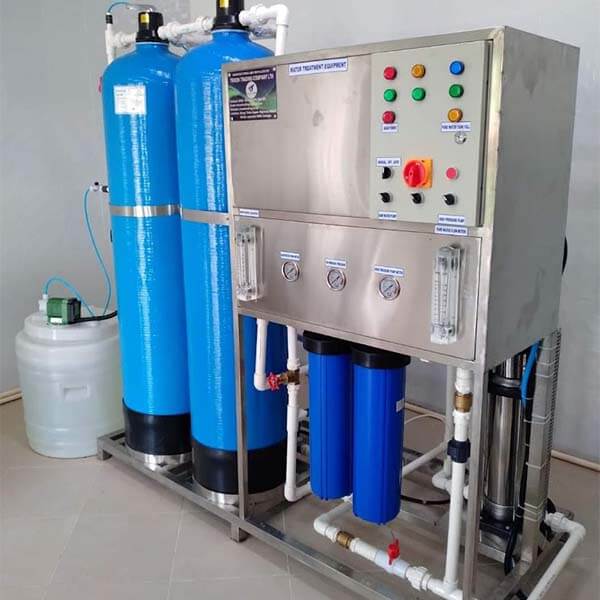
  RO500L Water Purifier Price in Kenya Shillings & ROI Breakdown Introduction For many Kenyan businesses, investing in a commercial water purification system is not just about clean water—it is about cost control, compliance, and long-term profitability. Whether you operate a water station, hotel, hospital, food processing plant, or manufacturing facility, water quality directly affects your operations and reputation. One of the most common questions business owners ask is: What is the cost of a commercial RO machine in Kenya, and is it worth the investment? In this post we shall discuss the Aquatech RO500L Water Purifier price in Kenya Shillings and it’s ROI. The RO500L Water Purifier is a high-capacity system designed for continuous commercial use. While its upfront cost may appear significant, the long-term financial and operational benefits often outweigh the initial investment. This guide breaks down the Aquatech RO500L commercial RO machine cost in Kenya shillings, explains what influences pricing, outlines operating expenses, and analyses the return on investment (ROI) for different types of Kenyan businesses. What Determines the Cost of a Commercial RO Machine in Kenya? The price of a commercial reverse osmosis system is influenced by several technical and operational factors. Understanding these elements helps buyers make informed comparisons. System Capacity and Output Higher capacity systems cost more because they: Produce more purified water per hour Use industrial-grade pumps and membranes Are designed for continuous operation The RO500L water purifier sits in the high-capacity category, making it suitable for demanding commercial environments. Quality of Components Not all RO systems are built the same. Pricing is affected by: RO membrane quality and lifespan Pump efficiency and durability Filtration stages and automation controls Cheaper systems may reduce upfront costs but often increase maintenance and downtime expenses. Water Source and Pretreatment Requirements In Kenya, borehole water often requires additional pretreatment to manage high salinity, hardness, or iron content. Systems configured for tougher water conditions may have slightly higher initial costs but perform better long term. Installation and After-Sales Support A complete solution includes: Site assessment Professional installation Commissioning and testing Operator training When evaluating the Aquatech commercial RO machine cost in Kenya shillings, it is important to consider these services as part of the total value. RO500L Water Purifier Price in Kenya Shillings The price of the RO500L Water Purifier in Kenya is KSh330,000. Where can you buy the RO500L Water Purifier in Kenya There are 2 main companies you can buy the machine from: Aquatech or Phynetech. RO500L Features That Influence Its Price The RO500L RO system is priced as a premium commercial solution because of the features designed to support reliability and scalability. High-Capacity Output Design The system is engineered to deliver consistent output suitable for water stations and commercial facilities with high daily demand. Industrial-Grade RO Membranes Durable membranes ensure: High salt rejection rates Longer service life Stable water quality even with variable raw water Robust Pumping and Control Systems Advanced pressure and flow controls protect components and improve efficiency, reducing long-term operating costs. Cost vs Performance Analysis of the RO500L Water Purifier When comparing cost versus performance, the RO500L water purifier consistently ranks among the best RO machines for businesses in Kenya. While smaller systems may appear cheaper initially, they often: Fail to meet demand Require frequent repairs Consume more energy per litre The RO500L water purification machine’s performance efficiency lowers cost per litre, making it more economical over time. Operating Costs and Maintenance Expenses Understanding ongoing costs is critical when calculating ROI. Electricity Consumption Commercial RO systems consume electricity to power pumps. However, efficient pump design in the RO500L water purification system helps keep power costs predictable and manageable. Filter and Membrane Replacement Typical consumables include: Sediment and carbon filters RO membranes (replaced every 12–24 months depending on water quality) Proper pretreatment significantly extends membrane life, reducing replacement frequency. Routine Servicing Scheduled servicing prevents breakdowns and maintains system efficiency. Compared to emergency repairs, planned maintenance is far more cost-effective. ROI Analysis of the RO500L Water Purifier for Kenyan Businesses The true value of the RO500L Water Purifier lies in its return on investment. Water Stations and Water Vending Businesses For water stations, ROI is often achieved within a short period because: Cost per litre drops significantly Daily production volume is high Demand for clean drinking water is consistent Many operators recover their investment within months, depending on sales volume. Hotels and Hospitality Facilities Hotels save money by: Eliminating bottled water purchases Improving guest satisfaction Reducing water-related complaints Manufacturing and Food Processing Consistent water quality reduces: Equipment scaling Product rejection Downtime caused by poor water quality Across these sectors, commercial water purification systems in Kenya like the RO500L RO system offer measurable financial and operational returns. Why Buying the Aquatech RO500L Water Purifier Lowers Long-Term Costs The supplier you choose affects lifetime system cost. Local Technical Expertise Aquatech configures systems specifically for Kenyan water conditions, preventing over- or under-sizing. Genuine Spare Parts and Support Access to original spare parts ensures: Shorter downtime Better system performance Lower long-term maintenance costs Kenya-Wide Service Coverage Nationwide support reduces travel and service delays, especially for businesses outside major cities. This makes the Aquatech RO500L reverse osmosis machine a safer long-term investment compared to imported systems without local backing. How to Budget for an RO500L Commercial Reverse Osmosis System When planning your purchase, consider: Initial system cost Installation and commissioning Monthly operating expenses Annual maintenance and consumables Viewing the RO500L RO system as a business asset rather than an expense helps align expectations with long-term benefits. RO500L Water Purifier – Conclusion Understanding the RO500L Commercial Reverse Osmosis Machine cost in Kenya requires looking beyond the purchase price. Capacity, build quality, operating efficiency, and supplier support all play a role in determining true value. For businesses that depend on reliable, high-quality water, the RO500L water purification system delivers strong ROI through reduced operating costs, improved water quality, and long-term reliability. Backed by Aquatech’s local expertise and after-sales support, the RO500L water purifier is a smart investment for water stations, hospitality businesses, … Read more