
UF vs RO Water Purification Systems in Kenya: Which One Should You Choose?
Choosing between Ultrafiltration (UF) and Reverse Osmosis (RO) water purification systems is one of the most common decisions faced by homeowners, institutions, and businesses in Kenya. While both technologies improve water quality, they serve very different purposes depending on your water source, usage needs, and budget.
This guide on UF vs RO water purification systems in Kenya explains the key differences between UF and RO systems, when each is the right choice, and how to avoid costly mistakes when selecting a water purification solution.
UF vs RO water purification systems in Kenya: Understanding the difference between UF and RO water purification
The main difference between UF and RO lies in what each technology removes from water.
- UF systems focus on removing bacteria, viruses, suspended solids, and turbidity.
- RO systems remove dissolved salts, heavy metals, chemicals, and microorganisms.
In simple terms:
- UF improves already treated or municipal water
- RO treats raw, borehole, salty, or high TDS water
Choosing the wrong system can lead to poor water quality or unnecessary operating costs.
What is Ultrafiltration (UF) water purification?
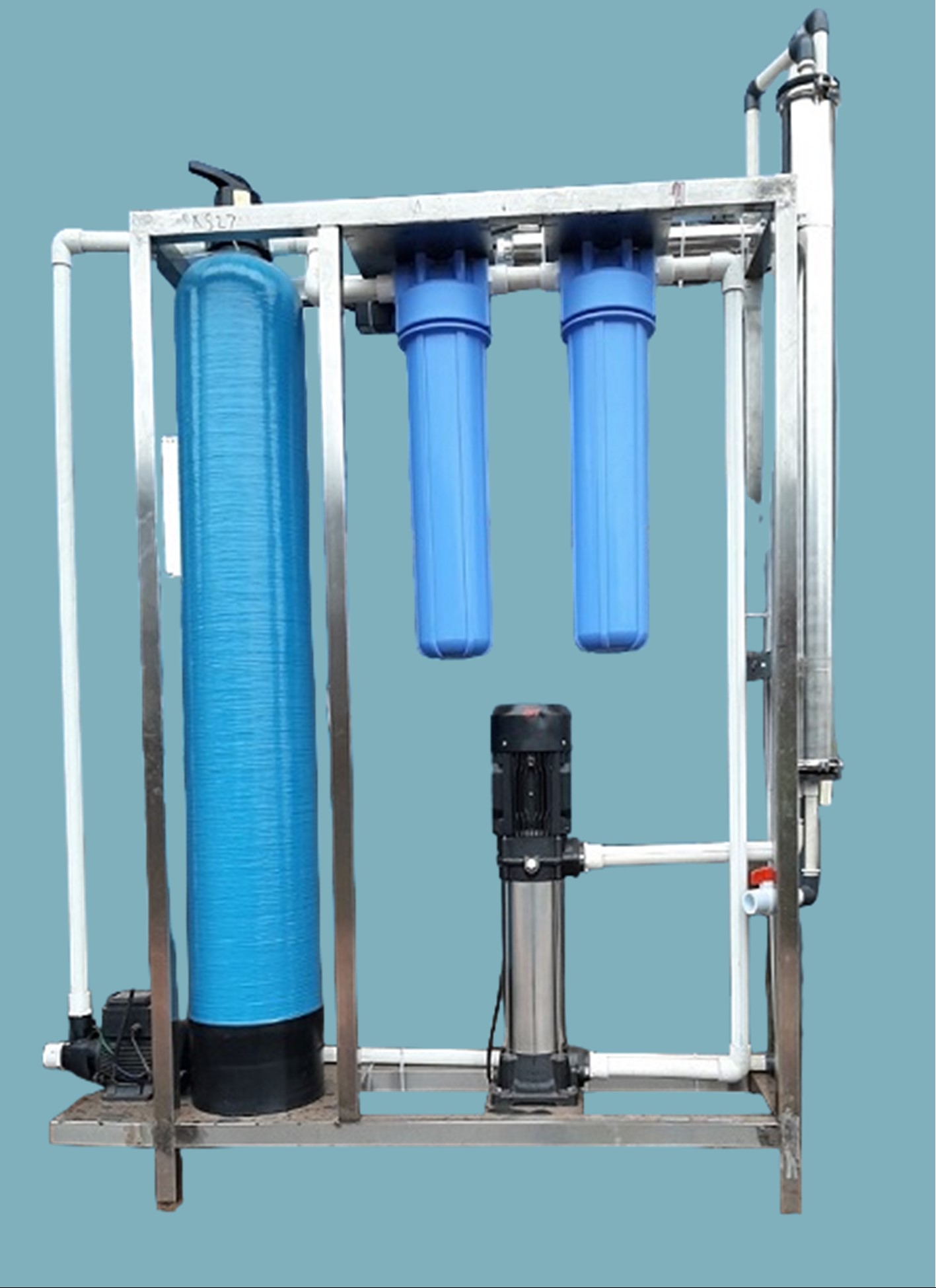 Ultrafiltration uses a UF membrane with very fine pores that physically block bacteria, cysts, and suspended particles. UF systems usually operate at normal water pressure and do not require high pressure pumps.
What UF systems remove
- Bacteria and viruses
- Suspended solids and turbidity
- Odour and chlorine (with carbon filtration)
What UF systems do NOT remove
- Dissolved salts
- High TDS
- Heavy metals
Because UF does not remove minerals, the water retains its natural taste and mineral content.
What is Reverse Osmosis (RO) water purification?
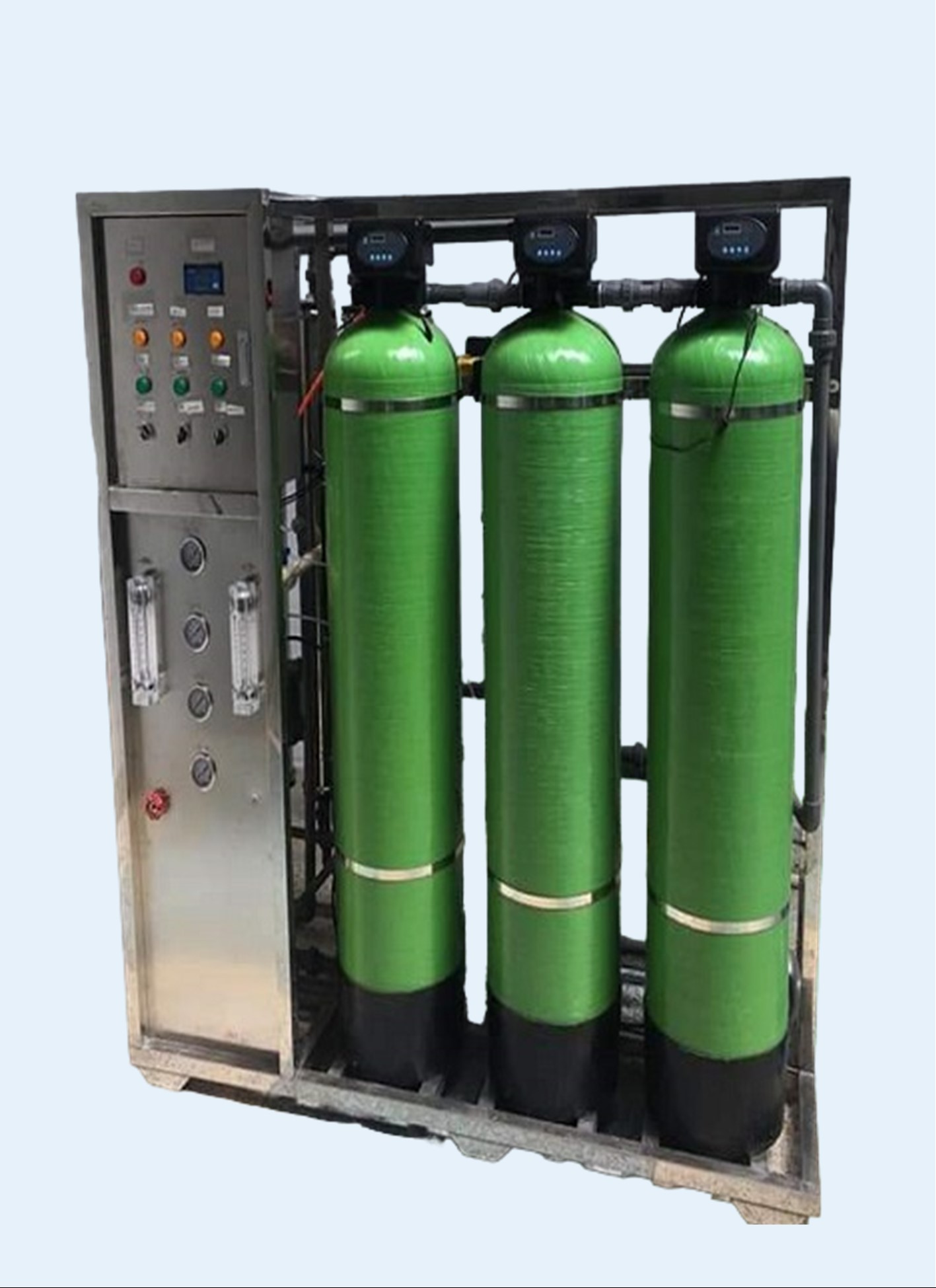 Reverse osmosis forces water through a semi permeable membrane using high pressure, removing both physical and dissolved contaminants.
What RO systems remove
- Dissolved salts and high TDS
- Heavy metals such as lead and arsenic
- Chemicals and nitrates
- Bacteria and viruses
Trade offs of RO systems
- Higher power consumption
- Water wastage due to rejection
- Requires pre treatment and regular maintenance
RO systems are essential when water quality is poor or unsuitable for direct consumption.
UF vs RO water purification systems in Kenya: UF vs RO based on water source in Kenya
Your water source is the most important factor when choosing between UF and RO.
Municipal or treated water
If your water comes from:
- County water supply
- Treated piped water
- Water already meeting basic TDS standards
UF is the better choice
UF improves safety and clarity without removing minerals or wasting water.
Borehole, salty, or high TDS water
If your water source is:
- Borehole water
- Salty or brackish water
- Water with high TDS or hardness
RO is mandatory
UF alone cannot remove dissolved salts or chemical contamination.
UF vs RO water purification systems in Kenya: Difference in operating cost and maintenance
 UF system operating cost
- Low power consumption
- No high pressure pump
- Minimal water wastage
- Simple cartridge and membrane replacement
UF systems are cheaper to run and maintain, making them ideal for institutions and estates.
RO system operating cost
- Higher electricity usage
- Water rejection during filtration
- More components to maintain
- Periodic membrane replacement
RO systems cost more to operate but are non negotiable for poor quality water.
UF vs RO water purification systems in Kenya: UF vs RO for businesses and institutions
Best use cases for UF systems
- Schools and colleges
- Hospitals using municipal water
- Offices and corporate buildings
- Residential estates
- Churches and public facilities
UF systems provide safe drinking water at low cost when water is already treated.
Best use cases for RO systems 
- Water refill and vending businesses
- Bottled water plants
- Hotels using borehole water
- Factories and food processing plants
- Clinics in areas with poor water quality
RO systems ensure compliance, safety, and consistency in demanding environments.
Water efficiency and environmental impact
UF systems are more water efficient because:
- No rejection water
- Minimal wastage
- Lower energy demand
RO systems:
- Reject a portion of feed water
- Consume more power
- Require proper drainage planning
For institutions conscious of sustainability and water conservation, UF is often preferred when applicable.
Can UF and RO be used together?
Yes. In some advanced setups:
- UF is used as pre treatment before RO
- This protects RO membranes and improves efficiency
However, for most users, one system is sufficient when chosen correctly.
UF vs RO water purification systems in Kenya: Which is better Between UF and RO?
 There is no universal answer. The best system depends on your water quality and application.
Choose UF if:
- Water is municipal or treated
- TDS is within acceptable limits
- You want low operating costs
- Mineral retention is preferred
Choose RO if:
- Water has high TDS
- Source is borehole or salty
- You are selling drinking water
- Compliance and purity are critical
Common mistakes buyers make in Kenya
- Installing UF on borehole water
- Buying RO for already treated municipal water
- Overspending on unnecessary capacity
- Ignoring water testing before purchase
A simple water analysis prevents expensive errors.
UF vs RO water purification systems in Kenya: Summary
UF vs RO at a glance
UF systems are ideal for improving safety and clarity of treated water, while RO systems are essential for purifying poor quality or high TDS water. The correct choice saves money, improves water quality, and ensures long term reliability.
If you are unsure which system is right for your application, professional guidance and water testing are essential.
Interested in buying a water purifier but still torn between RO systems and UF systems? Talk to Aquatech before you buy
If you are in investing in a water purifier but still can’t figure out which one is a good fit for your needs between a ultrafiltration water purifier and a RO system we are here to help. Aquatech supplies both Ultrafiltration and Reverse Osmosis water purification systems across Kenya and East Africa. We help clients choose the right technology based on actual water quality, not assumptions.
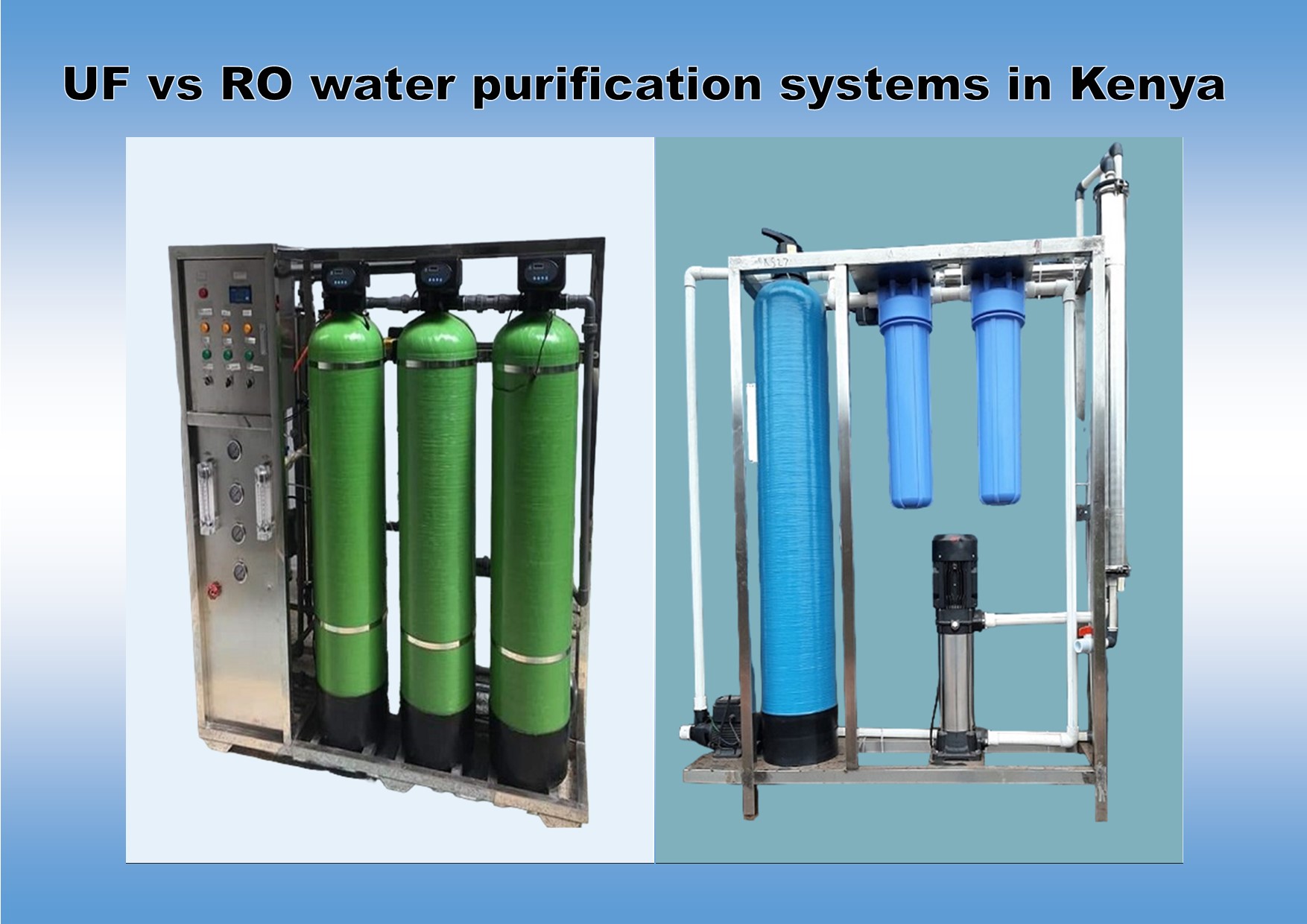 All systems come with:
- 1 year warranty
- Free installation and commissioning
- After sales support
Our Location and Contact Details
- Call: 0720900777 | 0707419100
- Email: info@aquatech.co.ke
- Location: Thika Road Exit 11, Immediately After Eastern Bypass, Before Shell Petrol Station, Kihunguro
- Hours: Mon – Fri: 7:30AM – 6:30PM